Walking Jaipur with one camera
Field notes
May 29, 2026
Jonas Weber
Field notes
Walking Jaipur with one camera
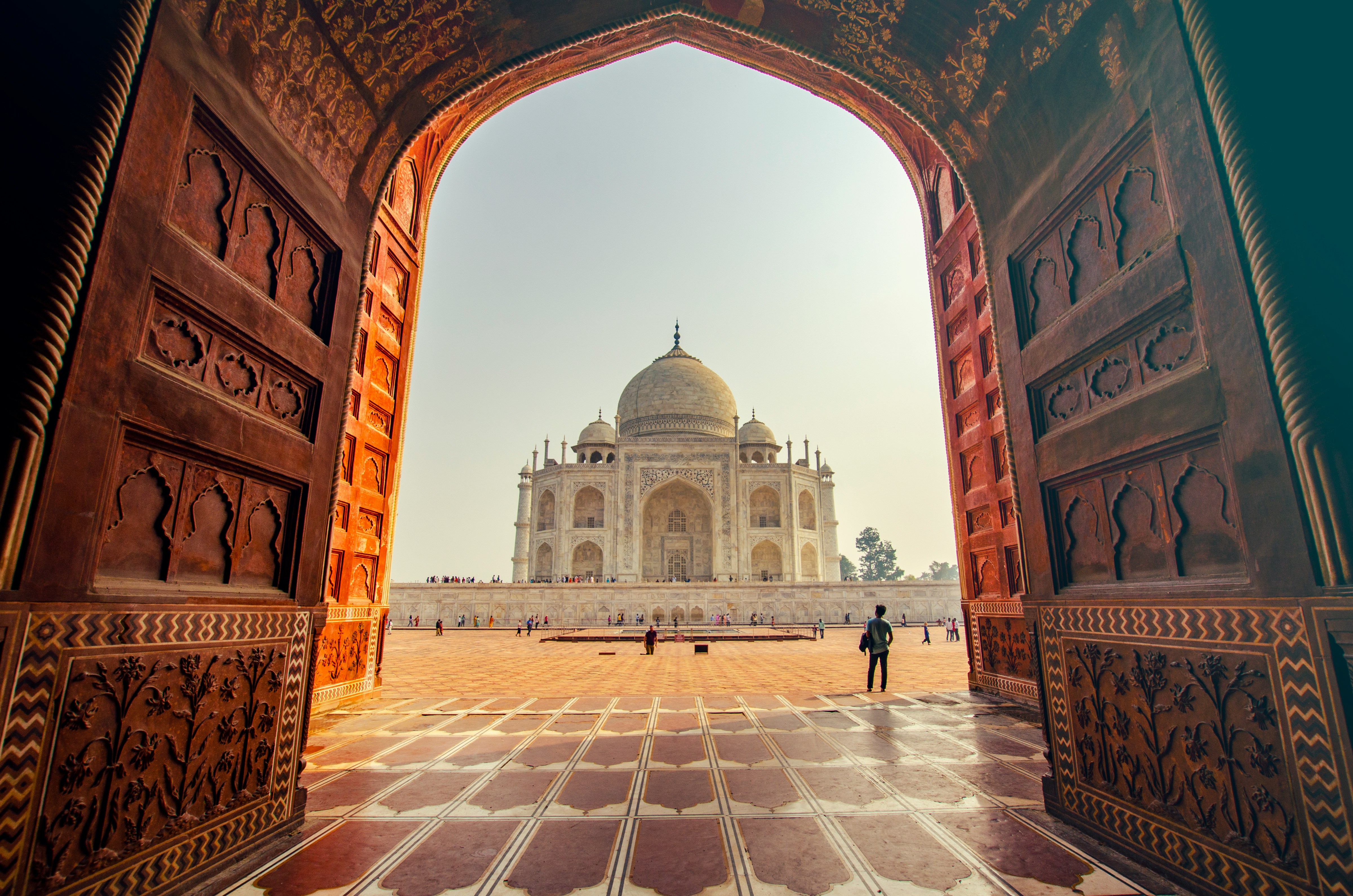
Fig. 01
Three weeks on foot with a small camera and a 28 mm lens, and why I left the zoom at home.
On my first morning in Jaipur, everything I carried for work fitted in two pockets. A small camera with a fixed 28 mm lens went in one; a spare battery and a notebook went in the other.
No bag, no tripod, nothing that made me look like I was working. For someone who usually climbs with two bodies and a 70–200 mm, it felt like going out in socks.
Three weeks later I came home with Pink City, the closest and quietest pictures I’ve made. Most of what changed came down to one small decision taken in Hamburg.
Why the zoom stayed in Hamburg
Packing for India was an evening of taking things out of the bag rather than putting them in. Everything that stayed behind had a reason:
The zoom, because it photographs a street from across the road.
The tripod, because it turns every stop into a set-up.
The camera bag, because it tells everyone I’m working.
What was left was small enough to forget about, which mattered more than I expected. A camera you forget about doesn’t change how you walk, and so it doesn’t change how anyone looks at you.
The 28 mm itself was a choice too. It’s wide enough to hold a doorway and the man standing in it, and narrow enough that a street doesn’t shrink into a postcard.
Walking closer instead of zooming
A fixed lens means every frame is decided with your feet. If you want it tighter, you take three steps in; if you want more of the street, you back up until a wall stops you.
That slows you down in a good way. It also puts you in the street rather than across it, and that changes what the street does with you.
The first two days were frustrating. Every interesting thing seemed to be at the wrong distance, and my left hand kept reaching for a ring that wasn’t there.
After a few days I knew roughly what the 28 mm would hold at each distance:
Distance | What fills the frame |
|---|---|
Arm’s length | Hands, a tool, a cup |
A doorway away | One man and his shop |
Across a lane | A shopfront and its sky |
Across a square | Everything, and nothing much |
Most of Pink City sits in the middle two rows. Any further and the pictures turned into views; any closer and people stopped what they were doing.
Nobody watches a small camera
People ignored a man with a small camera, and that is most of the series.
With a long lens, a street performs. Men straighten up, look into the glass or step out of the frame, and the picture you get is of them noticing you.
Held at chest height, a compact lets the street carry on. The rickshaw puller waiting at the corner keeps waiting, and the men at the tea stall go on arguing about the cricket.
Hardly a frame was made with the camera at my face. After a week I knew where the 28 mm’s edges fell well enough to frame from the chest, and the screen stayed dark in my hand.
Editors spot the difference straight away, even when they can’t say what it is.
“Pink City is closer than anything else Jonas has made. You stand where he stood, not across the road from it.”
Tobias Ahrens, photo editor at Nordlicht Magazine
Jaipur, Agra and Amber on foot
Three weeks sounds long for three places. On foot, at the speed of a man who keeps stopping, it was barely enough.
I stayed inside the old city for most of it, so each morning started a few streets from where I’d stopped the evening before.
Jaipur’s old city
Most of the series was made inside the old walls, where the buildings are the pink that gives the city its nickname and the series its title. I walked the same streets at different hours until the shopkeepers stopped looking up.
“Horses passing the Hawa Mahal” came from one of those repeats, on a morning when I’d stopped expecting anything from that corner.
The hours before the heat
Between 6:00 and 9:00 the light is low, the lanes are being swept and men are lifting their shutters one by one. By late morning the heat flattens everything and the crowds fill every gap, so that’s when I slept.
Agra
Agra was the hardest place to work with a small camera, because everyone there carries one. I spent my days away from the famous view, in the lanes behind it, where a man with a compact is just another visitor who has taken a wrong turn.
Those lanes gave me fewer pictures than Jaipur, and I didn’t mind. On foot, a day with one good frame is still a good day.
Amber
After the old city, the climb to Amber felt like being back in the mountains. The fort’s gateways frame the light the way a ridge frames the sky, and I worked them slowly, one doorway at a time.
A guard at the gate watched me stand at the same arch for most of an afternoon. On the second day he pointed, without a word, to where the light would fall next.
Try one lens for a week
The pictures in Pink City are closer and quieter than my landscape work, and that difference came from the camera, not from India. You don’t need to travel, or to take three weeks, to try it either.
Any town you know well will do, and so will the lens you already own, as long as you stop changing it.
Give it one week, with four rules:
Pick one focal length, and tape the zoom ring if you must.
Leave the bag at home and carry only what fits in pockets.
Walk the same few streets at different hours.
Take three steps closer before every frame.
By the end of the week the street will have stopped noticing you. That’s usually when the pictures start.
Pink City came out of three weeks of exactly that, and the whole series is in the book.
Newsletter
A short letter when a new series or journal post is out, about once a month.
More from the journal